
Health Insurance Serbia

Access to healthcare in Serbia is largely supported by the national health insurance system, which provides coverage for a wide range of medical services to citizens and registered residents. Managed by the Republic Health Insurance Fund, the system ensures that basic healthcare needs, including doctor visits, hospitalization, and essential treatments, are accessible at little or no direct cost.
While public insurance forms the foundation, private health insurance options are increasingly popular for those seeking faster access to specialists and premium services. Understanding the structure, eligibility, and benefits of health insurance in Serbia is essential for both locals and expatriates navigating the country’s healthcare landscape.
Understanding Health Insurance in Serbia: Coverage, Access, and Requirements
Health insurance in Serbia operates under a universal healthcare system primarily funded through mandatory social insurance contributions. Administered by the Republic Health Insurance Fund (RHIF), the system ensures that Serbian citizens, permanent residents, and certain categories of foreigners have access to a wide range of medical services, including primary care, hospitalization, diagnostics, and prescription drugs.
 Georgia Minimum Auto Liability Insurance 25 50 25
Enrollment is generally automatic for employed individuals, whose contributions are deducted from their salaries, while self-employed persons, pensioners, students, and unemployed individuals covered by social assistance are also included under the scheme.
The government subsidizes coverage for vulnerable groups, ensuring broad population access. While public healthcare is free at the point of service for insured individuals, some services may require co-payments or are not fully covered, leading many to opt for private health insurance as a supplement.
Private insurers offer shorter waiting times, access to a wider network of clinics, private rooms in hospitals, and additional services not covered by the public system. However, disparities in healthcare quality between urban and rural areas, along with occasional shortages of medical supplies, pose ongoing challenges to the system’s efficiency.
Types of Health Insurance Coverage Available in Serbia
In Serbia, health insurance coverage is divided into public (compulsory) and private (voluntary) schemes. The public system, managed by the Republic Health Insurance Fund, covers medical examinations, hospital treatment, emergency care, maternity services, chronic disease management, and essential medications listed on the national reimbursement schedule. All members of society who contribute to social security—either directly or through state subsidies—are entitled to these benefits.
 Great Rates Auto Insurance
On the other hand, private health insurance has grown in popularity due to its ability to offer faster access to specialists, elective procedures, dental care, and diagnostics without waiting lists. Private policies are offered by various insurance companies such as DDOR Zoon, Victoria Osiguranje, and Eurochef Osiguranje, and can be purchased individually or provided through employers.
These plans often include value-added services like 24/7 medical hotlines, preventive screening, and international coverage, making them a preferred option for expatriates, high-income individuals, and multinational company employees.
Eligibility and Enrollment Process for Health Insurance
Eligibility for Serbia’s public health insurance is primarily based on employment status, residency, and citizenship. Employees are automatically enrolled when they start working, as both the employer and employee contribute to the social security system, which includes health insurance. Self-employed individuals must register with the Pension and Disability Insurance Fund and make monthly contributions.
Students, children, pensioners, and unemployed individuals receiving state social benefits are also covered, with the government covering their contributions. Foreign nationals residing in Serbia for more than 90 days—such as workers with residence permits, researchers, or family members of Serbian citizens—are required to enroll in the system either through employment or by paying contributions independently.
 Gto Auto Insurance And Multi Services
The enrollment process typically involves submitting identification documents, proof of residence, and employment or student status to the local branch of the Republic Health Insurance Fund or through an online portal. Once registered, individuals receive a health insurance card, which grants them access to medical services at public institutions nationwide.
Public vs. Private Healthcare Services and Costs
While public healthcare in Serbia is free at the point of use for insured individuals, access and quality can vary significantly.
Public hospitals and clinics provide essential services covered by the RHIF, but patients often face long waiting times for specialist appointments and non-emergency procedures. Additionally, some prescription medications require co-payments, and advanced treatments or premium medical devices may not be fully reimbursed.
In contrast, private healthcare facilities offer quicker appointments, modern equipment, and personalized service, though at a cost. Private consultations typically range from €30 to €80, while comprehensive private insurance plans can cost between €50 and €150 per month depending on coverage level.
 Guaranteed Auto Protection Insurance Market
Many patients use a hybrid approach—relying on the public system for major treatments and turning to private clinics for diagnostics or routine check-ups. The table below outlines key differences between public and private healthcare in Serbia.
| Aspect | Public Healthcare | Private Healthcare |
|---|---|---|
| Cost to Patient | Free for insured; small co-pays for some meds/services | Out-of-pocket or covered by private insurance |
| Waiting Time | Long for specialists and elective procedures | Short; often same-day or next-day appointments |
| Facility Quality | Varies; well-equipped in cities, limited in rural areas | Generally modern with advanced technology |
| Coverage Scope | Basic and essential medical services | Broad, including dental, preventive, and elective care |
| Accessibility | Nationwide, but uneven distribution | Concentrated in major cities like Belgrade and Novi Sad |
Comprehensive Guide to Health Insurance in Serbia
Does Serbia provide health insurance coverage for residents and foreigners?

Health Insurance Coverage for Residents in Serbia
Serbia provides universal health insurance coverage to its residents through the Republic Institute of Health Insurance (RIHI), which operates under the Ministry of Health.
All Serbian citizens and legally registered residents are entitled to access publicly funded healthcare services, provided they are enrolled in the mandatory health insurance system. Enrollment is typically linked to employment, with contributions automatically deducted from wages, or through social welfare programs for retirees, unemployed individuals, and other vulnerable groups.
 Hartford Insurance Aarp Auto Insurance
Once enrolled, residents can access a broad range of services, including primary care, specialist consultations, hospital treatment, and prescribed medications at subsidized rates. The system aims to ensure equitable access to healthcare regardless of income level.
- Citizens and permanent residents must register with the Republic Institute of Health Insurance to receive coverage.
- Employed individuals contribute a percentage of their income, while the state covers contributions for pensioners and certain low-income groups.
- Insured individuals receive a health insurance card, which grants access to public healthcare facilities across the country.
Health Insurance Access for Foreigners in Serbia
Foreign nationals living in Serbia may also be eligible for health insurance coverage depending on their legal status and residency conditions. EU citizens can use the European Health Insurance Card (EHIC) to access necessary medical care during temporary stays.
Non-EU foreigners who hold a temporary or permanent residence permit are generally required to enroll in the national health insurance system, either through employment or by making private contributions if they are self-employed or retirees.
Students from countries with bilateral agreements with Serbia may receive coverage for urgent and essential medical services. However, tourists and short-term visitors without insurance must typically pay for medical services out of pocket unless covered by private travel insurance.
- Foreign workers with legal employment are automatically enrolled in the public health system with employer-paid contributions.
- Students from countries with reciprocal healthcare agreements are entitled to basic medical services during their stay.
- Non-resident foreigners without insurance must pay fees directly at healthcare facilities unless they have private health coverage.
Scope and Limitations of Public Healthcare Coverage
While Serbia's public health insurance system offers comprehensive benefits, there are notable limitations in terms of service availability, infrastructure, and waiting times.
Coverage includes outpatient and inpatient treatments, emergency services, maternity care, and some rehabilitation services. However, access to certain specialized treatments, advanced diagnostic procedures, and newer medications may be limited or subject to delays due to budget constraints.
Many patients choose to supplement public coverage with private health insurance or pay out of pocket for faster access to care or higher-quality facilities. Additionally, while primary care is widely accessible, regional disparities exist, particularly between urban centers like Belgrade and rural areas with fewer medical professionals and facilities.
- Public healthcare covers essential services but may not include the latest medical technologies or drugs.
- Patient wait times for specialists and elective surgeries can be long, prompting some to seek private options.
- Private clinics are available for those who can afford additional insurance or direct payments for expedited services.
What health insurance coverage do tourists need for medical care in Serbia?
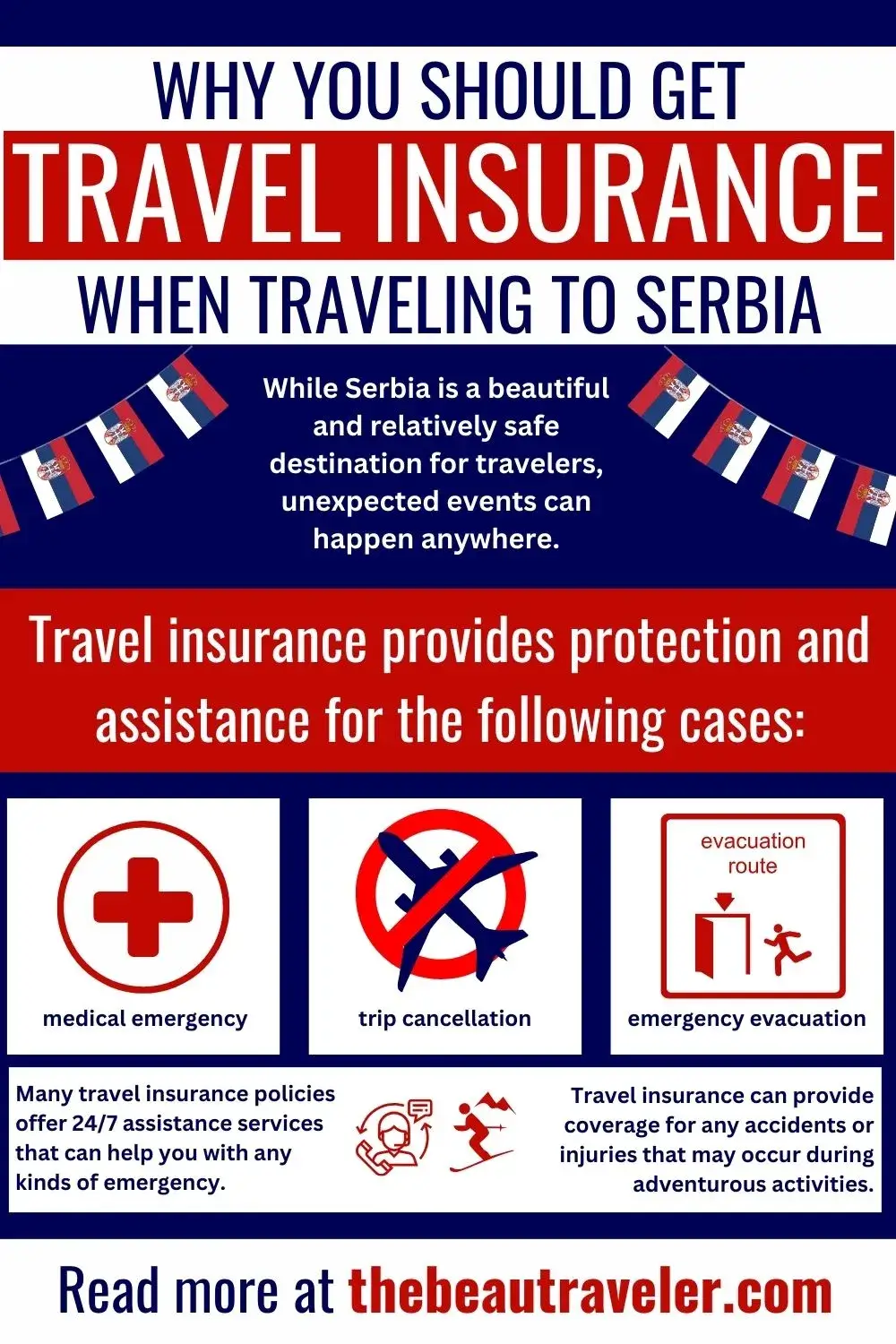
Necessity of Travel Health Insurance for Tourists in Serbia
- Tourists traveling to Serbia are strongly advised to have valid travel health insurance before arrival, as the public healthcare system does not provide free medical services to foreign visitors who are not covered by reciprocity agreements.
- While emergency treatment might be administered in urgent cases, patients are typically required to pay for services out of pocket unless they have insurance that covers medical expenses in Serbia.
- Having comprehensive travel health insurance ensures coverage for unexpected medical emergencies, hospitalization, outpatient care, prescription medications, and potential medical evacuation, reducing financial risks during the trip.
Reciprocity Agreements and Their Limitations
- Serbia has bilateral healthcare reciprocity agreements with certain countries, primarily other Balkan nations such as Bosnia and Herzegovina, Montenegro, and North Macedonia, allowing citizens from these countries to access public healthcare using their national health cards.
- European Union citizens can use their European Health Insurance Card (EHIC) to receive necessary medical care under the same conditions as Serbian nationals, but the EHIC does not cover all services, such as repatriation or non-urgent treatments.
- Travelers from countries without such agreements, including the United States, Canada, Australia, and others, must rely entirely on private travel insurance for any medical needs during their stay in Serbia.
Recommended Insurance Coverage Features
- Tourists should ensure their health insurance policy includes emergency medical treatment, hospitalization, and coverage for pre-existing conditions if applicable, as standard plans may exclude such cases without additional riders.
- It is essential that the policy covers medical evacuation and repatriation, as specialized care for serious conditions might require transport to another country, which can be extremely expensive if not insured.
- Travelers should verify that their insurance provider has a direct payment arrangement with hospitals in Serbia or offers reimbursement for out-of-pocket expenses, and they should carry printed proof of coverage while traveling.
Frequently Asked Questions
Who is eligible for health insurance in Serbia?
Residents of Serbia, including citizens and foreign nationals with temporary or permanent residence, are eligible for public health insurance. Employees, pensioners, students, and unemployed individuals registered with the authorities are automatically covered. Foreigners working legally in Serbia also contribute through payroll deductions. Proof of residence or employment is required to access services under the Republic Health Insurance Fund.
How does the public health insurance system work in Serbia?
Serbia’s public health insurance is managed by the Republic Health Insurance Fund (RFZO), funded through mandatory contributions from employees, employers, and the state. It provides access to essential medical services, including doctor visits, hospitalization, and prescription drugs. Patients must register with a primary care physician and obtain referrals for specialists. Most services are free or require small co-payments, ensuring broad healthcare access.
Can expatriates enroll in Serbia's health insurance system?
Yes, expatriates legally residing or working in Serbia can enroll in the public health insurance system. They must register with the Republic Health Insurance Fund and provide proof of residence, employment, or a long-term visa. Contributions are usually deducted from salaries for employed foreigners. Self-employed expats must pay contributions independently. Once enrolled, they receive the same coverage as Serbian citizens for medical treatments and services.
Is private health insurance necessary in Serbia if you have public coverage?
Private health insurance is not mandatory in Serbia but offers benefits like shorter wait times, access to private clinics, and additional services not fully covered by public insurance. Many people use it for dental care, elective procedures, or international coverage. Public insurance covers essential care, so private plans are optional and typically used to supplement existing benefits and improve convenience and choice in healthcare.
Leave a Reply