
Home health care services insurance

Home health care services insurance has become an essential component of modern healthcare planning, offering financial protection for individuals requiring medical and non-medical assistance in the comfort of their homes. As the aging population grows and demand for long-term care rises, more families are turning to home-based care as a cost-effective and comfortable alternative to institutional settings.
Insurance plans covering home health care typically include services such as nursing care, physical therapy, personal care assistance, and help with daily activities. Understanding coverage options, eligibility requirements, and out-of-pocket costs is crucial for making informed decisions and ensuring access to necessary care.
Understanding Home Health Care Services Insurance: Coverage, Benefits, and Eligibility
Home health care services insurance plays a critical role in supporting individuals who require medical and non-medical assistance in the comfort of their own homes.
 Home inspection e&o insurance
These insurance plans are designed to cover a range of services, including skilled nursing, physical therapy, occupational therapy, speech-language pathology, and assistance with daily living activities such as bathing, dressing, and meal preparation. Coverage varies significantly depending on the type of insurance—whether it's Medicare, Medicaid, private health insurance, or long-term care insurance—and understanding the specifics of each is essential for maximizing benefits.
Eligibility often hinges on medical necessity, as determined by a licensed physician, and may require a patient to be homebound in the case of Medicare coverage. With rising healthcare costs and an aging population, home health care insurance helps reduce hospital readmissions, supports aging in place, and provides cost-effective solutions compared to institutional care.
Types of Insurance That Cover Home Health Care Services
Several types of insurance can provide coverage for home health care services, each with distinct eligibility criteria and benefit structures.
Medicare is one of the most common sources, covering skilled services like nursing care and rehabilitation therapies when the patient is under a doctor’s plan of care and considered homebound. Medicaid, which varies by state, often includes broader coverage, including personal care services for low-income individuals. Private health insurance plans may offer home health benefits, but these are typically limited in scope and duration, and often require prior authorization.
 Home insurance age uk
Additionally, long-term care insurance policies are specifically designed to address extended care needs, including in-home support, and can be a valuable asset for older adults planning for future care. Understanding the differences among these options ensures individuals can access the most appropriate and comprehensive support.
What Services Are Typically Covered Under Home Health Insurance?
Most home health care insurance policies cover a range of medically necessary services provided by licensed professionals. These include intermittent skilled nursing care, physical and occupational therapy, speech-language pathology, and medical social services.
Some plans, especially Medicaid and long-term care insurance, may also cover personal care services such as assistance with bathing, dressing, toileting, and meal preparation when combined with skilled care. Medical equipment and supplies like wound dressings or blood sugar monitors may be included if deemed necessary.
However, custodial care—non-medical assistance provided by aides without formal medical training—is often not covered by standard medical insurance unless paired with skilled care. It's crucial for patients and families to review their policy details, as coverage limitations and pre-authorization requirements can affect access.
 Home insurance claim proof of ownership requirement
How to Qualify for Home Health Care Insurance Benefits
Qualifying for home health care insurance benefits usually depends on meeting specific medical and administrative criteria.
For Medicare, patients must have a doctor-certified need for skilled care, be under a formal plan of care, and be considered homebound, meaning leaving home requires considerable effort and is medically discouraged. A face-to-face encounter with a physician is required within a defined period before services begin. Medicaid eligibility is based on income and functional need, often assessed through state-specific evaluations.
Private insurers may require documentation of medical necessity and prior approval before initiating care. Completing all necessary assessments, securing physician orders, and working with Medicare-certified home health agencies are key steps in ensuring qualification and avoiding claim denials.
| Insurance Type | Covered Services | Key Eligibility Criteria | Limitations |
|---|---|---|---|
| Medicare | Skilled nursing, therapy, medical social services, intermittent care | Homebound status, doctor’s plan of care, face-to-face visit | No custodial care; limited to part-time or intermittent services |
| Medicaid | Skilled care, personal care, homemaker services, aide support | Income eligibility, functional need assessment | Varies by state; may require managed care enrollment |
| Private Insurance | Therapy, skilled nursing (coverage varies) | Medical necessity, pre-authorization | Often limited visits; high out-of-pocket costs |
| Long-Term Care Insurance | Personal care, companion care, home modifications | Policy-specific triggers (e.g., inability to perform ADLs) | Waiting periods apply; daily benefit limits |
Understanding Home Health Care Services Insurance: A Comprehensive Guide
What types of insurance cover home health care services?
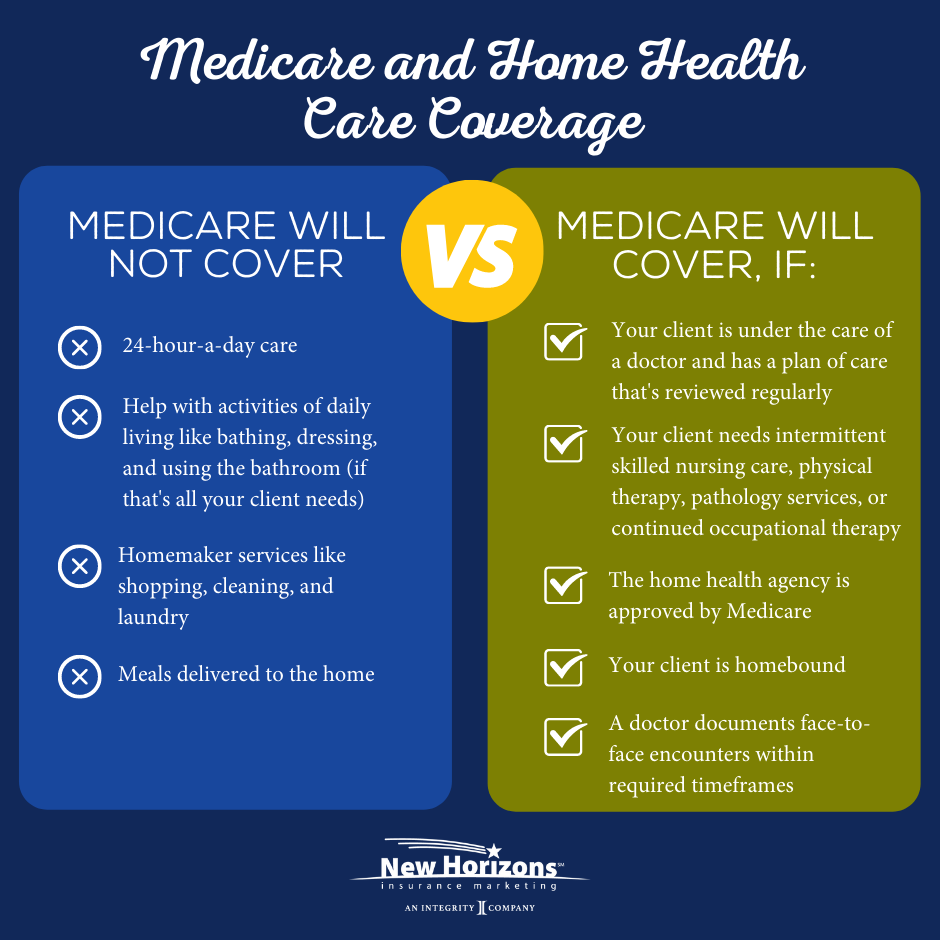
Medicare Coverage for Home Health Care Services
Medicare is one of the primary insurance options that may cover home health care services, particularly for individuals who are homebound and require skilled nursing or therapy services.
To qualify, a patient must have a doctor’s certification stating that they are homebound and need specific medical services such as wound care, physical therapy, or intravenous injections. Medicare typically pays for intermittent skilled nursing care, physical therapy, occupational therapy, and speech-language pathology services when they are deemed medically necessary.
It also covers medical social services and part-time or intermittent home health aide services, but only if the patient is also receiving skilled care. Importantly, Medicare does not cover 24-hour in-home care or personal care services such as help with bathing or dressing unless those are provided alongside skilled medical care.
- Patients must be certified as homebound by a physician to be eligible for Medicare home health benefits.
- Coverage includes services like physical therapy, skilled nursing visits, and speech therapy when medically necessary.
- Medicare does not pay for custodial care, which includes daily personal tasks like eating or dressing, unless accompanied by skilled care.
Medicaid and State-Specific Home Health Benefits
Medicaid, a joint federal and state program, provides health coverage for low-income individuals and families and often includes home health care benefits. The extent of coverage varies widely by state, as each state designs its own Medicaid plan within federal guidelines.
In many states, Medicaid covers both skilled nursing services and personal care services, allowing enrollees to receive assistance with activities of daily living at home. Some states also operate Home and Community-Based Services (HCBS) waivers, which allow individuals who would otherwise require nursing home-level care to receive services in their homes.
These programs can include homemaker services, meal delivery, and respite care for family caregivers. Eligibility depends on income, asset limits, and medical need, and applicants must go through a functional assessment to determine the level of care required.
- Medicaid coverage for home health care varies by state, with some states offering extensive personal care services.
- HCBS waivers allow individuals to receive long-term care services at home instead of in institutions.
- Eligibility is based on financial criteria and a demonstrated need for assistance with daily living activities.
Private Health Insurance and Long-Term Care Policies
Private health insurance plans, including employer-sponsored group plans and individual market policies, may offer some level of home health care coverage, although the scope is often more limited than Medicare or Medicaid.
These plans typically cover medically necessary skilled services, such as post-surgical rehabilitation or chronic disease management delivered at home. However, they are less likely to cover custodial or non-medical care. Long-term care insurance, a separate type of policy, is specifically designed to cover extended personal care services, including home health aides.
These policies vary significantly in terms and benefits; some pay a daily benefit for home care, while others reimburse actual expenses up to a limit. Policyholders should carefully review their plan documents to understand covered services, duration of benefits, and any required waiting periods before coverage begins.
- Private health insurance usually covers only skilled medical services provided at home, not ongoing personal care.
- Long-term care insurance is tailored for home-based custodial care and offers different payout structures.
- Benefit limits, waiting periods, and eligibility criteria vary significantly among private and long-term care policies.
What insurance options cover home health care services?

Medicare Coverage for Home Health Care Services
- Medicare Part A and Part B cover certain home health care services if you are homebound and under the care of a doctor who certifies the need for intermittent skilled nursing care, physical therapy, occupational therapy, or speech-language pathology services.
- Services must be provided by a Medicare-certified home health agency, and the care plan is reviewed regularly by a physician to ensure continued eligibility.
- Covered services include skilled nursing care on a part-time basis, physical and occupational therapy, medical social services, durable medical equipment (such as wheelchairs or hospital beds), and home health aide services when combined with skilled care.
Medicaid and State-Specific Home Health Benefits
- Medicaid programs, which vary by state, often include home health care services for eligible low-income individuals, particularly seniors and people with disabilities who qualify for long-term care support.
- Each state designs its own Medicaid home and community-based services (HCBS) waivers or programs, which may allow recipients to receive personal care, skilled nursing, therapy, and other support services in their homes instead of institutional settings.
- Eligibility, covered services, and provider requirements differ significantly across states, so individuals must contact their state Medicaid office to understand the specific benefits available in their region.
Private Insurance and Long-Term Care Insurance Options
- Many private health insurance plans offer limited coverage for home health care, typically focusing on short-term skilled care following a hospitalization or surgery, similar to Medicare guidelines.
- Long-term care insurance policies often provide more comprehensive benefits for home health care, including assistance with activities of daily living (ADLs) such as bathing, dressing, and meal preparation, but coverage details depend heavily on the specific policy terms and benefit triggers.
- Employer-sponsored health plans and individual market policies may include home health benefits, though they often require preauthorization, have visit limits, and may only cover care deemed medically necessary and ordered by a physician.
Does Medicare Cover Home Health Care Services Provided by Caregivers?
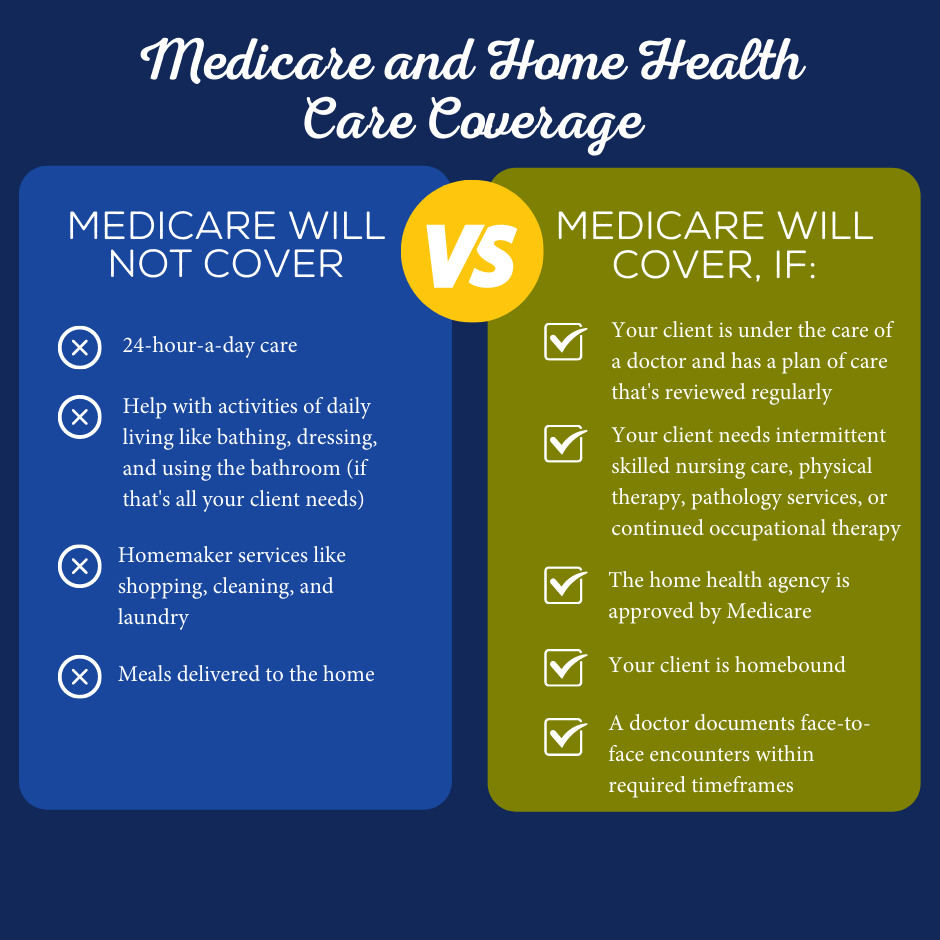
What Home Health Care Services Are Covered by Medicare?
Medicare provides coverage for certain home health care services, but only under specific conditions and if the services are deemed medically necessary. These services are typically covered under Medicare Part A (Hospital Insurance) and Part B (Medical Insurance).
The care must be prescribed by a doctor and provided by a Medicare-certified home health agency. Covered services include skilled nursing care on a part-time or intermittent basis, physical therapy, occupational therapy, speech-language pathology services, medical social services, and certain durable medical equipment.
It's important to note that Medicare does not cover 24-hour-a-day care, meal delivery, or personal care services such as bathing or dressing, unless they are provided alongside skilled care.
- Skilled nursing care must be provided intermittently and as part of a doctor-approved plan of care.
- Therapy services, including physical and occupational therapy, must be necessary for recovery from an illness or injury.
- Durable medical equipment such as wheelchairs or oxygen equipment may be covered if prescribed for home use.
Who Qualifies for Medicare Home Health Benefits?
To qualify for Medicare-covered home health care, a patient must meet several criteria. First, they must be under the care of a doctor who regularly certifies the need for home health care. Second, a Medicare-approved home health agency must provide the services.
Third, the individual must be considered homebound, meaning that leaving home requires considerable effort and is medically limiting. This does not mean the person cannot leave home at all, but their absences should be infrequent or short in duration, such as for medical appointments. Lastly, the care must involve skilled services that require professional expertise.
- The patient must have a written plan of care established and reviewed regularly by a physician.
- All services must be delivered by a Medicare-certified home health agency to be eligible for payment.
- The homebound status must be certified by a doctor, supported by medical documentation.
Does Medicare Cover In-Home Care from Personal Caregivers?
Medicare generally does not cover long-term personal care services provided by caregivers who assist with activities of daily living, such as bathing, dressing, eating, and using the bathroom. These types of non-medical services, often referred to as custodial care, are not considered skilled care and therefore fall outside Medicare’s coverage.
However, if a patient requires occasional skilled nursing care or therapy services, Medicare may cover those treatments and, in some cases, allow limited personal care to be provided at the same time. For ongoing personal care assistance, individuals may need to rely on other funding sources, such as Medicaid, long-term care insurance, or private payment.
- Custodial care, like help with bathing or dressing, is not covered unless it is provided in addition to skilled care.
- If a patient receives skilled services, limited personal care can be covered during the same period of care.
- Families often explore alternative resources such as Medicaid waivers or private long-term care plans to cover caregiver services.
Frequently Asked Questions
What does home health care services insurance typically cover?
Home health care services insurance usually covers skilled nursing care, physical, occupational, and speech therapy, medical social services, and assistance with daily activities. Coverage often includes services provided by licensed professionals at home following hospitalization or for chronic conditions. Most plans require a doctor’s order and may cover part-time or intermittent care. Coverage varies by insurer, so reviewing your policy details is essential to understand specific benefits and limitations.
How do I qualify for home health care insurance benefits?
To qualify, you typically need a doctor’s certification that you require skilled nursing or therapy services at home. You must also be under a care plan supervised by a physician and be homebound, meaning leaving home requires considerable effort. Medicare and many private insurers require these criteria. Additional eligibility may depend on the severity of your condition and whether services are medically necessary and provided by approved agencies.
Does Medicare cover home health care services?
Yes, Medicare covers eligible home health care services under Part A and Part B. It includes skilled nursing, therapy, and home health aide services if you meet specific requirements—such as being homebound and having a doctor-ordered care plan. Medicare typically covers 100% of approved services, but does not include custodial care or 24-hour at-home care. Always confirm your specific coverage details with Medicare or your provider.
Can private insurance plans be used for in-home care?
Yes, many private insurance plans offer coverage for in-home health care services, though benefits vary by policy. Coverage may include skilled nursing, therapy, and personal care depending on medical necessity. Some plans have limits on the number of visits or duration of care. It's important to check with your insurer about pre-authorization requirements, approved providers, and out-of-pocket costs like copayments or deductibles to understand your full coverage scope.
Leave a Reply