
Do I Need Special Travel Insurance When Pregnant

Traveling while pregnant can be exciting, but it also raises important questions about health, safety, and preparedness.
One key concern is whether standard travel insurance is sufficient or if special coverage is needed. Most travel insurance policies have specific restrictions and exclusions related to pregnancy, particularly in the later stages or if complications arise. Coverage for routine prenatal care is typically not included, but some plans may cover unexpected complications.
Understanding the terms, gestational limits, and medical evacuation options is crucial. Pregnant travelers should carefully review policies to ensure they’re adequately protected throughout their journey.
 Do I Need Special Insurance For Uber Eats
Do I Need Special Travel Insurance When Pregnant?
When traveling while pregnant, one of the most important considerations is whether your standard travel insurance will cover pregnancy-related complications. In most cases, standard travel insurance policies do not provide comprehensive coverage for pregnancy, especially as your due date approaches.
Many insurers consider pregnancy a pre-existing condition and may exclude medical expenses related to childbirth, miscarriage, or emergency procedures unless you have a policy that explicitly includes pregnancy coverage. The need for special travel insurance depends on factors such as your gestational age, the destination, and the length of your trip.
While some short trips in the early stages of pregnancy may be covered under general policies, long-haul flights, remote destinations, or travel beyond 28–32 weeks typically require a specialized plan. It’s essential to read the fine print and possibly purchase an add-on or a separate policy that addresses maternal health needs during travel.
When Is It Safe to Travel During Pregnancy?
Most healthcare providers consider the second trimester (weeks 14 to 27) the safest time to travel during pregnancy, as the risk of miscarriage drops significantly and morning sickness often subsides.
 Do I Need Special Insurance To Be A Delivery Driver
Airlines and insurers commonly allow pregnant travelers to fly up to 36 weeks for single pregnancies and 32 weeks for multiples, though rules vary by carrier and insurer. Traveling too close to your due date increases the risk of going into labor prematurely, which can result in serious medical complications and high unplanned costs.
Some destinations also pose additional risks, such as areas with high altitudes, limited medical facilities, or outbreaks of diseases like Zika virus, which can affect fetal development. Always consult your doctor before booking any trip and ensure your travel insurance aligns with both medical guidelines and airline policies.
What Does Pregnancy Travel Insurance Typically Cover?
Specialized pregnancy travel insurance generally covers unexpected complications that arise during the trip, such as emergency hospitalization, bed rest due to preterm labor, medically necessary evacuations, and early delivery costs.
Coverage often includes repatriation to your home country if advised by a doctor and may even extend to neonatal care for the newborn if delivered abroad. However, most policies exclude routine prenatal visits, elective procedures, and scheduled deliveries.
 Do I Need Special Insurance To Deliver Food
Coverage limits, eligibility windows (usually up to 28–32 weeks gestation), and maximum age thresholds for the pregnant traveler also vary significantly between providers. It’s crucial to verify whether your policy covers cancellation due to pregnancy complications and whether your chosen destination is included in the plan’s geographic scope.
How to Choose the Right Insurance for Pregnancy Travel?
To select the right travel insurance for pregnancy, start by reviewing your existing health insurance and any credit card benefits to avoid overlapping or inadequate coverage.
Look for policies that explicitly mention pregnancy and childbirth coverage, with clear terms on gestational limits and medical emergencies. Compare several providers, paying close attention to exclusions, claim procedures, and 24/7 emergency assistance availability.
Make sure the insurer recognizes obstetric care abroad, and confirm whether pre-authorization is required for medical treatment. Reading customer reviews and contacting customer service with specific questions about pregnancy can also help determine reliability. Keeping documentation such as a doctor’s note confirming fitness to travel and prenatal records on hand is also advisable.
 Do I Need Special Insurance To Deliver Pizza
| Insurance Feature | Covered? | Notes |
|---|---|---|
| Emergency hospitalization due to pregnancy | Yes (in most specialized policies) | Generally covered up to 32–36 weeks gestation |
| Early labor or preterm delivery | Yes (with limitations) | Includes hospitalization and baby's care in NICU |
| Medical evacuation | Yes (if medically necessary) | Coverage varies by insurer; check limits |
| Routine prenatal check-ups | No | Excluded from nearly all travel insurance plans |
| Travel cancellation due to miscarriage | Sometimes | Only if listed as a covered reason in policy |
| Repatriation after delivery | Yes (in comprehensive plans) | May include mother and newborn |
Do I Need Special Travel Insurance When Pregnant? A Comprehensive Guide
Can I Travel While Pregnant Without Special Insurance Coverage?
Is It Safe to Travel During Pregnancy Without Special Insurance?
Traveling while pregnant without special insurance coverage is generally possible, especially during the second trimester when most women experience fewer pregnancy-related discomforts and the risk of complications is relatively low.
Most healthy pregnant women can travel safely by car, train, or airplane up to about 36 weeks, depending on the mode of transportation and airline policies. However, the absence of special insurance coverage means you’ll be responsible for any medical expenses if complications arise during your trip.
Routine prenatal care and emergencies abroad or even in another state may not be fully covered by standard health insurance plans, particularly if you’re outside your provider's network. It’s crucial to review your current health insurance policy in detail to understand what maternal care, emergency services, or hospitalization may be covered during travel.
 Do I Need Special Insurance To Doordash
- Consult your healthcare provider before planning any trip to ensure your pregnancy is progressing normally and you’re fit to travel.
- Verify if your current health insurance offers out-of-network or out-of-state coverage for prenatal emergencies.
- Be aware that not all clinics or hospitals abroad accept international insurance, which could lead to out-of-pocket medical costs.
What Risks Are Involved in Traveling While Pregnant Without Insurance?
Traveling while pregnant without appropriate insurance exposes you to several health and financial risks. Pregnancy can present unexpected complications such as gestational hypertension, preeclampsia, premature labor, or placental issues, which may require immediate medical attention. Without insurance, medical care—especially in private hospitals or foreign countries—can be extremely costly and could result in significant financial burden.
In-flight emergencies during air travel are particularly concerning, as medical assistance on airplanes is limited, and an emergency landing could still leave you liable for ambulance, hospital, and treatment charges. Additionally, visiting countries without robust maternal healthcare systems poses its own risks if you suddenly need prenatal monitoring or emergency obstetric services.
- Unplanned medical visits due to pregnancy complications can result in high bills, particularly in countries like the United States with expensive healthcare.
- Pregnancy-related emergencies during travel may necessitate early delivery, leading to extended stays and additional medical costs.
- Evacuation or medical repatriation services are typically not included in standard plans and can cost tens of thousands of dollars if needed.
What Precautions Should You Take When Traveling Pregnant Without Special Coverage?
Even without special pregnancy insurance, you can take practical steps to make your travel safer and reduce potential risks.
Start by carrying a copy of your prenatal records, including ultrasound results and blood test reports, to ensure continuity of care if you need medical attention abroad. Wear your seatbelt properly during car rides—low across the hips and below the belly—and take frequent breaks to stretch and promote circulation to reduce the risk of blood clots.
When flying, stay hydrated, walk the aisle regularly, and consider wearing compression stockings. Research hospitals and clinics at your destination in advance to know where you’d go in case of an emergency. While travel insurance without specific pregnancy coverage may not cover childbirth or pregnancy complications, some basic plans may cover unrelated medical emergencies.
- Carry documentation of your pregnancy due date, medical history, and any risk factors to assist healthcare providers abroad.
- Choose destinations with accessible, quality maternal healthcare facilities and avoid remote or high-altitude locations.
- Purchase a travel insurance plan that, while not covering pregnancy delivery, may cover emergency medical events unrelated to your pregnancy.
Is pregnancy coverage included in standard travel insurance, or do I need a specialized policy?
Whether pregnancy coverage is included in standard travel insurance depends on the provider, policy terms, and the stage of pregnancy.
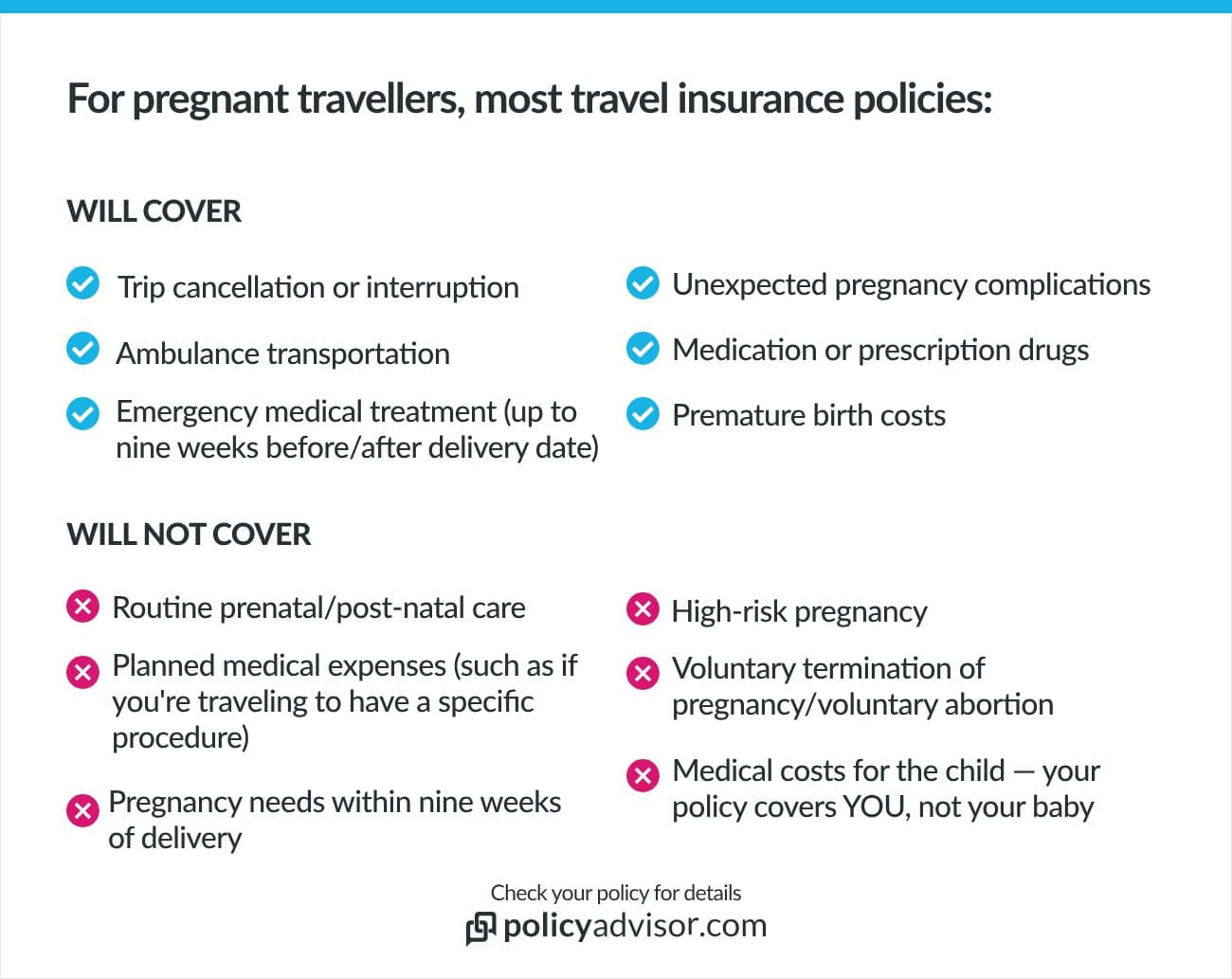
Generally, most standard travel insurance policies offer limited coverage for pregnancy-related complications but exclude routine prenatal care, elective procedures, and claims related to childbirth. Coverage is typically restricted to emergencies that occur before a specific gestational age—often up to 26 or 32 weeks for single pregnancies and earlier for multiples.
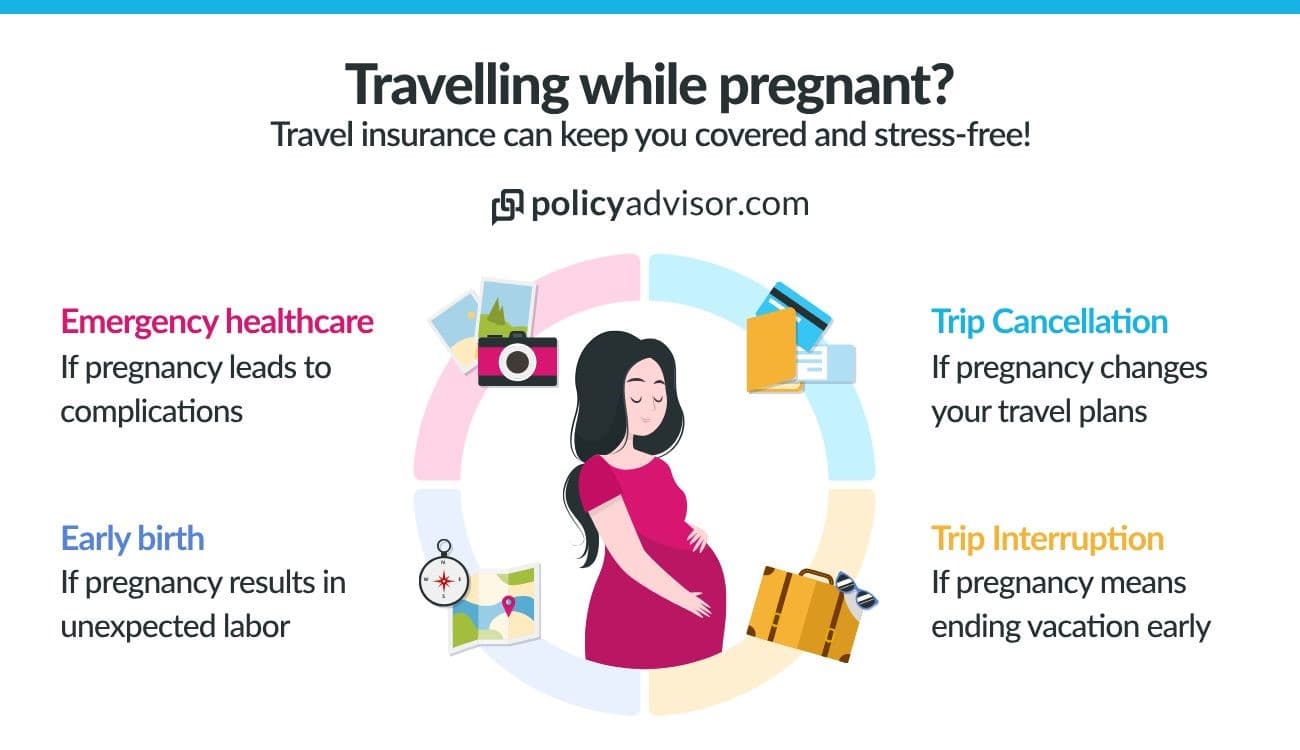
If complications such as preterm labor, preeclampsia, or miscarriage arise during the trip, the policy may cover emergency medical treatment and, in some cases, medical evacuation or trip cancellation. Travelers should carefully review policy details and consider additional coverage if they are in a later stage of pregnancy or have known health risks.
What Does Standard Travel Insurance Typically Cover for Pregnancy?
- Standard travel insurance usually includes emergency medical coverage for unexpected pregnancy complications, such as ectopic pregnancy, severe morning sickness requiring hospitalization, or sudden preterm labor, provided these occur earlier than the policy’s cutoff week, often around 26 weeks for single pregnancies.
- Most policies will also cover trip interruption or cancellation if a pregnancy-related emergency forces an early return home or prevents travel altogether, such as a doctor-ordered bed rest diagnosis shortly before departure.
- However, routine prenatal visits, ultrasounds, prescribed vitamins, or planned delivery costs are not covered under standard plans, as these are considered expected and non-emergency expenses.
When Is a Specialized Pregnancy Travel Insurance Policy Necessary?
- A specialized policy may be necessary if you are traveling in the later stages of pregnancy—beyond 26 weeks—since many standard insurers void coverage after this point due to the higher risk of going into labor.
- Travelers expecting multiples (twins, triplets, etc.) may also need tailored coverage, as the gestational age limit for coverage is often stricter, sometimes ending as early as 20 to 24 weeks.
- Individuals with pre-existing pregnancy conditions like gestational diabetes, placenta previa, or a history of preterm birth may find that standard policies exclude them entirely, making a specialized plan with declared conditions essential for adequate protection.
How Can I Ensure My Pregnancy Is Covered While Traveling?
- Begin by checking the policy’s terms related to pregnancy, including covered gestational age limits, defined complications, and exclusions, ensuring your travel dates fall within an eligible window.
- Disclose your pregnancy when purchasing the policy, even if it’s not required, to avoid claim denials later—transparency helps confirm that coverage is valid for pregnancy-related emergencies.
- Consider adding trip cancellation/interruption benefits with a cancel for any reason (CFAR) upgrade if you're concerned about changes in your pregnancy status, as this provides more flexibility, though it usually comes at an additional cost and with specific claim conditions.
Is standard travel insurance sufficient during pregnancy, or is specialized coverage required?
Whether standard travel insurance is sufficient during pregnancy depends on the specific policy, the stage of pregnancy, and the destination. Most standard travel insurance policies provide limited coverage for pregnancy-related issues and typically exclude complications, especially after a certain gestational week (usually after 26 to 32 weeks).
Basic policies may cover emergency medical treatment for unexpected issues unrelated to pregnancy, but they rarely include benefits for routine prenatal care, elective delivery, or complications such as gestational diabetes or preterm labor.
If pregnancy is considered a pre-existing condition, it may not be covered at all unless disclosed and accepted by the insurer. Travelers who are pregnant or planning to be should carefully review policy terms and consider purchasing additional or specialized pregnancy-inclusive coverage to ensure adequate protection.
Coverage Limits and Gestational Restrictions
- Most standard travel insurance policies impose gestational age limits, commonly restricting coverage after 26 to 32 weeks of pregnancy, meaning any medical event occurring beyond that point is excluded.
- These limitations exist because the risk of complications such as premature labor increases significantly in the third trimester, making it a higher liability for insurers.
- Even within the covered period, benefits may only apply to emergencies unconnected to the pregnancy itself, leaving conditions like preeclampsia or placental issues uncovered unless specified in a specialized plan.
Inclusions and Exclusions in Standard Policies
- Standard policies generally cover emergency medical evacuation, hospitalization, and treatment for accidents or sudden illnesses, but explicitly exclude routine prenatal visits, childbirth, and pregnancy monitoring.
- If a traveler experiences a non-pregnancy-related medical event—such as a broken bone or food poisoning—coverage typically applies regardless of pregnancy status.
- However, if a pregnancy complication arises, such as miscarriage or emergency cesarean delivery, standard insurance often denies claims unless the policy explicitly includes pregnancy complications as a covered reason.
When Specialized Pregnancy Travel Insurance Is Necessary
- Specialized pregnancy travel insurance becomes essential when traveling during late pregnancy, to high-risk destinations, or when pre-existing conditions like gestational diabetes or hypertension are present.
- These tailored plans may extend coverage up to 38 weeks of gestation, include emergency delivery costs, neonatal care, and trip cancellation due to pregnancy complications.
- They also often provide greater flexibility for changing travel plans, such as allowing rescheduling of flights or extensions of stay due to medical advice, offering peace of mind beyond what standard policies can provide.
Frequently Asked Questions
Do I need special travel insurance when pregnant?
Yes, you may need a travel insurance policy that specifically covers pregnancy, especially if you're traveling during your second or third trimester. Standard policies often exclude pregnancy-related complications. Look for policies that cover emergency medical care, premature birth, or unexpected hospitalization. Always declare your pregnancy when purchasing insurance to ensure full coverage and avoid claim denials.
When is it safe to travel while pregnant?
Travel is generally safest during the second trimester (weeks 14 to 27), when morning sickness has usually passed and the risk of miscarriage is lower. Most airlines allow travel up to 36 weeks for single pregnancies. Check with your doctor and airline before booking. Avoid destinations with poor medical facilities or health risks like Zika virus to ensure your safety and comfort.
What pregnancy complications are typically covered by travel insurance?
Most pregnancy-inclusive travel insurance policies cover unexpected complications like gestational diabetes, preeclampsia, or premature labor. However, routine prenatal care and elective procedures are not covered. Coverage often includes emergency hospitalization, evacuation, or early return home if medically necessary. Always confirm what's included in your policy and ensure you have documentation from your healthcare provider if making a claim.
Can I be denied travel insurance because I’m pregnant?
You cannot typically be denied coverage solely for being pregnant, but many policies exclude pregnancy-related issues unless specifically added. Insurers may require you to be under a certain gestational age (often up to 28 or 32 weeks) and have no complications. Always disclose your pregnancy when applying to avoid voiding the policy and to ensure appropriate coverage.
Leave a Reply